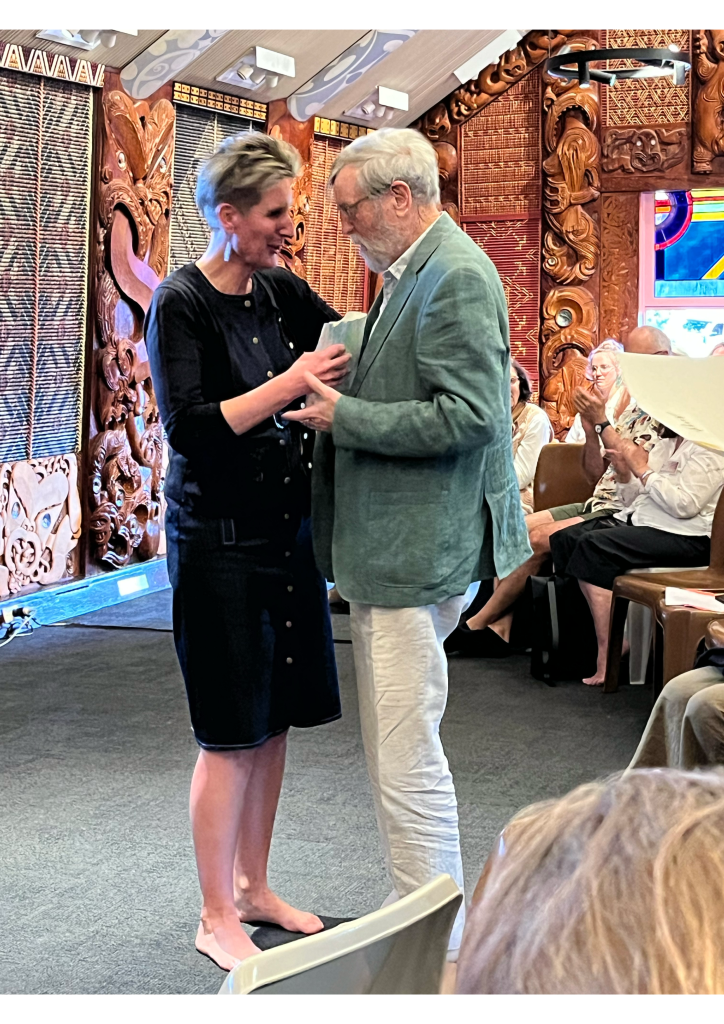
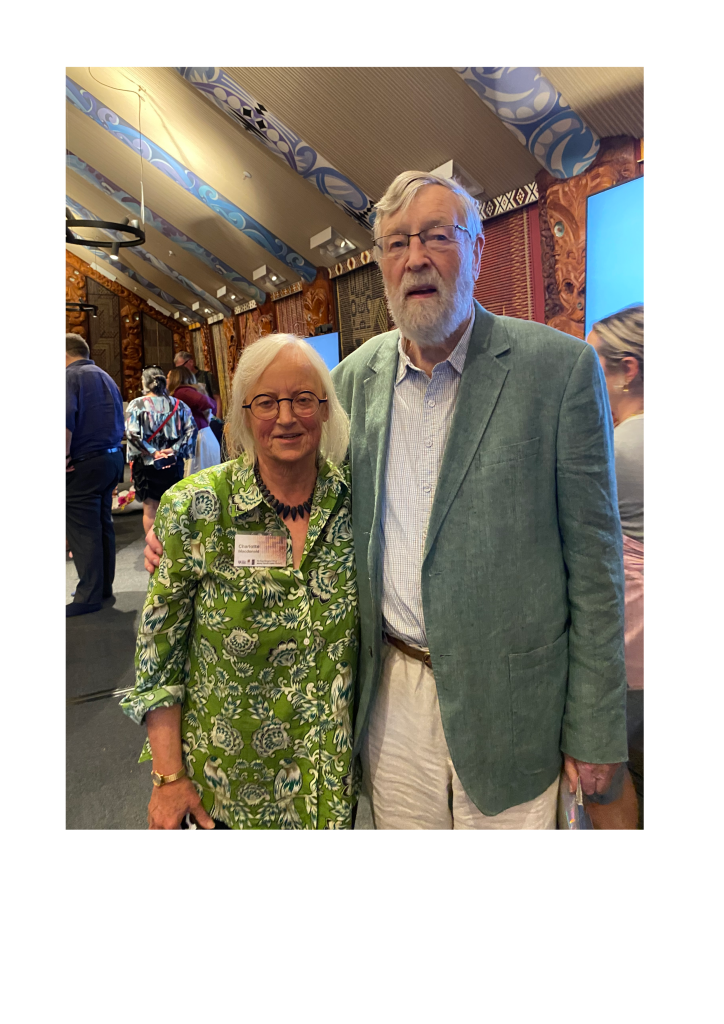
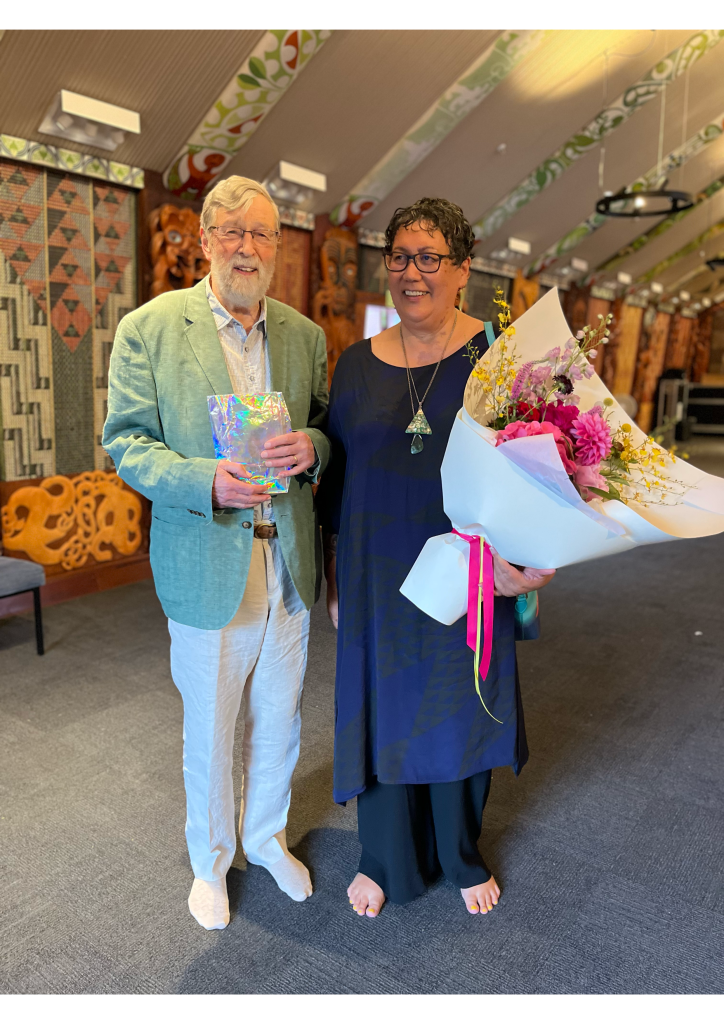
This year, the Council of the NZHA would like to honour Emeritus Professor Erik Olssen
with this award.
Erik and his work will be familiar to most people in this room. Made an Officer of the New-Zealand Order of Merit in 2002, he is the author of ten sole-authored books and four co-authored books, Erik is one of our country’s most prolific historians. Many of us likely had our early interest in the history of Aotearoa piqued by his illustrated history, co-authored with Judith Binney and Judith Bassett, The People and the Land: Te Tangata me te Whenua, a wonderfully illustrated introduction timed for the sesquicentenary in 1990. I have vivid memories of finding this book on the shelves at my high school library and becoming captivated by the stories told and the evocative images. He has won multiple awards and fellowships for his work. This includes a fellowship of the Royal Society of New Zealand, a James Cook Fellowship, and a Fulbright fellowship to the United States.
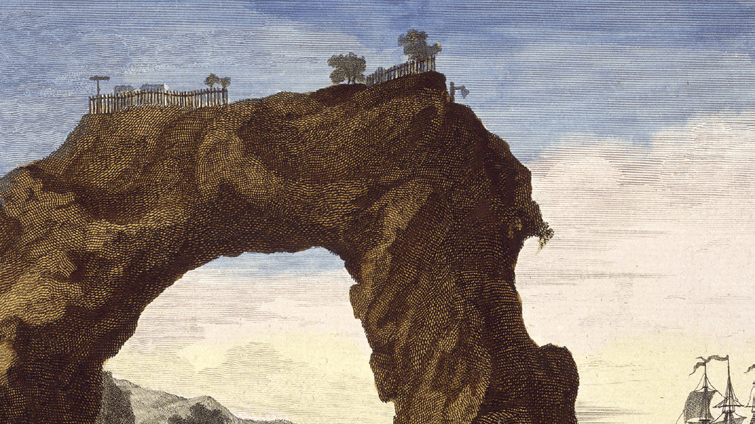
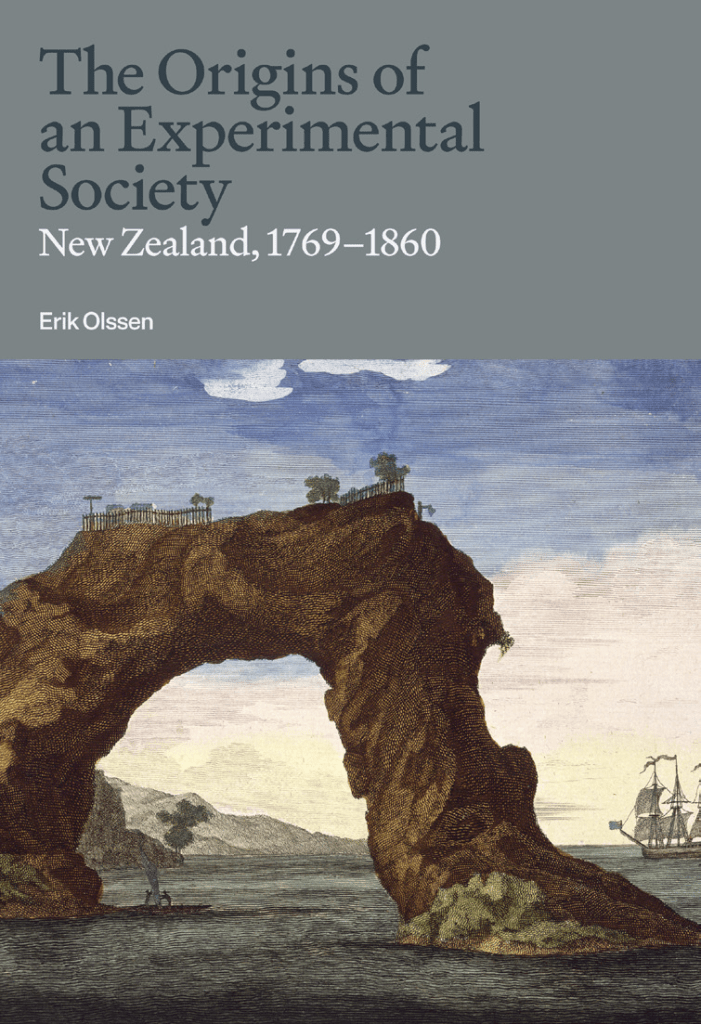
At an age when most are enjoying the quietude of retirement, Erik continues to research and write. Just this year, he published The Origins of an Experimental Society, New Zealand, 1769-1860 with Auckland University Press. At nearly 600 pages, this stimulating intellectual history of the origins of what we call ‘New Zealand’ in a European context is a testament to Erik’s broad-ranging interests, his rigorous research in archives, and in wide-ranging historiographical reading. It is already being well received in academic and public venues. And it’s only volume one of a projected three-volume set!
Erik has not only been a formidable researcher. He has played significant roles in the discipline at national and international levels. He has served on the Historic Places Trust Board, carried out national history curriculum reviews, served on the policy and regional working groups for the Dictionary of New Zealand Biography, Royal Society of New Zealand fellowship committees, and the Alexander Turnbull Library Endowment Trust Board. He has long championed Uare Taoka o Hākena, the Hocken Collections, in Ōtepoti/Dunedin as one of New Zealand’s most significant research libraries.
Erik was fundamental in making the History department at Otago a leader in research and teaching. He served two terms as Head of Department, increasing staffing levels and guiding a merger of History with Art History. He was alert to new trends and promoted engagement with women’s history, Māori history, and world history.
Erik’s former students express gratitude for his supervision and guidance. Former student and colleague Emerita Professor Barbara Brookes recalls the excitement of being supervised by Erik in 1976 for her honours dissertation on the topic of abortion in the 1930s. Erik encouraged her to seek postgraduate opportunities in the United States, pointing to a trajectory she would not have considered without his guidance.
Pamela Wood writes, ‘I had the benefit of Erik’s vast knowledge of NZ history and his keen intellect. I always appreciated how he gave advice in a way that was particularly helpful. I still use his advice on writing a chapter, based on his love of cricket – “line and length”!’
On behalf of the Caversham Project research team, Maureen Hickey writes that, ‘We were all incredibly lucky that Erik gave us the opportunity to work on the Caversham Project – it’s an indication of Erik’s many fine qualities as a boss, mentor and friend that many of us are still in touch and love getting the opportunity to spend time with him all these years later. The Project itself was fascinating, ambitious, and unlike any other historical study in New Zealand in its scale, multi-disciplinary approach, span of subjects and use of data to examine interesting historical questions. Erik pulled together a team of NZ and international historians, geographers, statisticians, gender studies, data and computer experts to name just some and made it interesting, challenging and fun.’
As will be clear, Erik believes in the mission of academia to act as critic and conscience of society and to uphold the most rigorous standards of research. At the same time, he has advocated and participated in some of the key institutions for public and community history-making. His is not the career of someone simply comfortable in the ivory tower. At a personal level, many of us have been lucky to experience his warmth and generosity, his keen eye, and his enjoyment of a scholarly dispute.
It is with great respect and admiration that we present Emeritus Professor Erik Olssen with the NZHA Award for contribution to New Zealand history.
We were all incredibly lucky that Erik gave us the opportunity to work on the Caversham Project – it’s an indication of Erik’s many fine qualities as a boss, mentor and friend that many of us are still in touch and love getting the opportunity to spend time with him all these years later. The Project itself was fascinating, ambitious, and unlike any other historical study in New Zealand in its scale, multi-disciplinary approach, span of subjects and use of data to examine interesting historical questions. Erik pulled together a team of NZ and international historians, geographers, statisticians, gender studies, data and computer experts to name just some and made it interesting, challenging and fun.
For the students he hired into research, statistics and IT/data-based roles Erik was incredibly generous, supportive and patient. He was dedicated to growing everyone’s skills and passion for history and inspired us to be more curious and to think about new ways to understand the world. Erik gave us the opportunity to learn new things, to test ideas and be tested, to author or co-author papers and books, to create archives of material and oral histories, to grapple with both intensely local and national history and how they interact with each other, and also to expand our skills in ways that has set the course of our different careers.
In all of that Erik constantly showed a warm and genuine interest in our success and involved us as equals in the research and collaboration processes. And in doing that he built an engaged and collaborative team that genuinely enjoyed working together – which is in itself a great skill.
Erik is a story-teller and always tells great (and often self-deprecating) stories – an enduring Caversham team favourite is the one about when his pipe set him on fire in a lecture. And in creating this project- that really was at the forefront of using computer technology to examine the historical records in new ways – Erik was fabulous at seeing the potential of the technology but not always at using it. Hamish, our informal IT support guy still remembers the time he got called down the corridor to Erik’s office to look at his frozen Word document. After brief investigation, the cause of this became apparent, as Erik had somehow ended up taking a screenshot of his document and was trying to work on that.